Rental Agreement vs Lease Agreement: Key Differences Explained (India 2025 Guide)
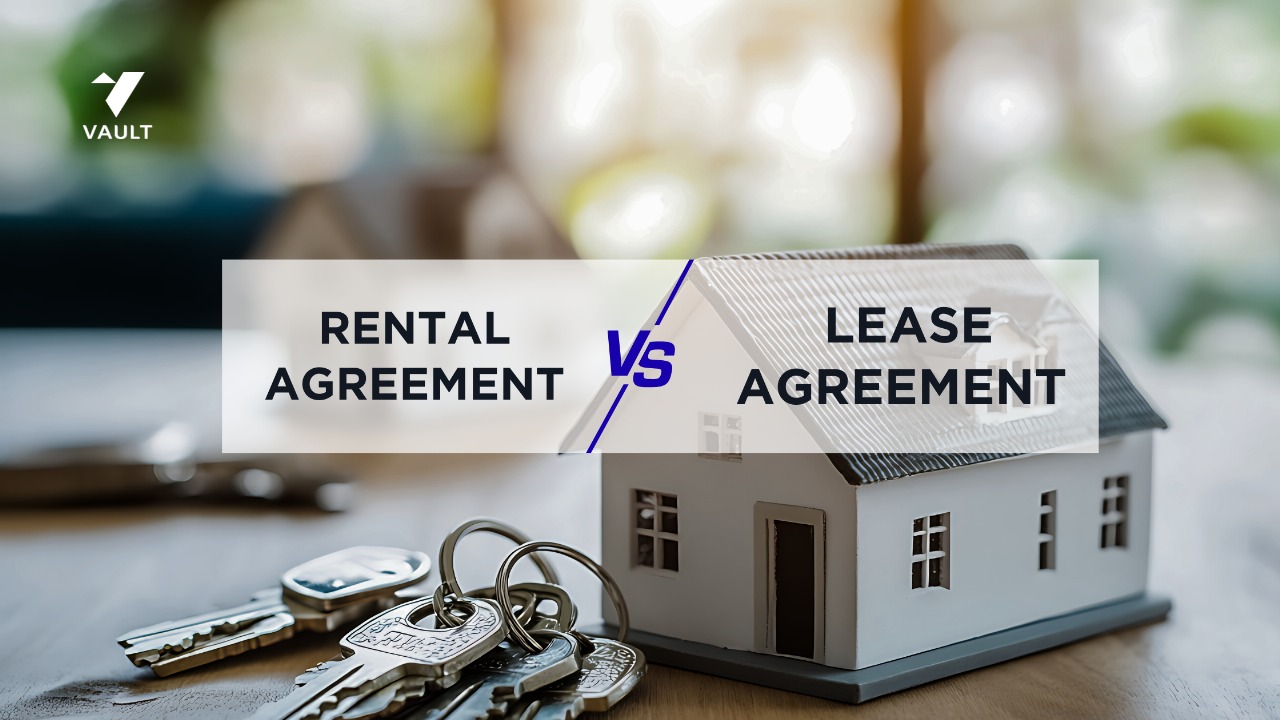
If you are planning to rent or lease a house, a shop, or an office in India, then you must have come across the terms rental agreement and lease agreement. Though they sound similar, they’re legally different and serve different purposes. This guide outlines the difference between lease and rental agreements in India, the advantages and disadvantages of both the agreements.
What Is a Rental Agreement?
A rental agreement is a short-term contract between a landlord and a tenant, usually for 11 months. It gives flexibility which is a perfect deal for people who frequently move cities or need temporary accommodation.
Key Features:
- Duration: Up to 11 months.
- Renewal: It is easily renewed.
- Control: Landlords can revise rent frequently.
- Registration: Optional (though advisable).
- Use Case: Residential homes, paying guest rooms, short stay.
What Is a Lease Agreement?
A lease agreement is a long-term contract, between the landlord and tenant, usually for 1 year or more or based on the requirements of parties. It gives the tenant more stability, but offers less flexibility to the owner.
Key Features:
- Duration: Up to 1 year or more
- Rent: Fixed for the entire period of stay
- Registration: Mandatory if over 12 months
- Use Case: Commercial buildings, residential, offices
Lease vs Rental Agreement: Side by Side Comparison
| Category | Rental Agreement | Lease Agreement |
|---|---|---|
| Duration | Up to 11 months | 1 year or more or based on the requirements of parties |
| Flexibility | High - easy to renew or terminate | Low - fixed duration |
| Registration | Optional (below 12 months) | Optional (below 12 months) |
| Legal Act | Governed by Rent Control Act | Covered under the Transfer of Property Act |
| Rent Revision | Can be revised | Can be revised |
| Best For | Short stays | Long-term stays |
| Example Use | Residential homes | Offices, factories, warehouses |
Difference Between Lease and Rental Agreement in India
To put it in simple words:
- A Rental agreement is the same as a month to month or 11 month contract.
- A lease agreement is a long-term, legally binding contract that provides more security to the tenant but limits flexibility of the owner.
Lease vs Rental Agreement: Advantages and Disadvantages
Advantages:
| Aspect | Rental Agreement Pros | Lease Agreement Pros |
|---|---|---|
| Flexibility | Easy to renew or cancel | Long-term security |
| Paperwork | Less complicated | Provides legal clarity |
| Best For | Short-term tenants | Long-term tenants |
| Maintenance | Landlord decides terms | Often shared or fixed |
Disadvantages:
| Aspect | Rental Agreement Cons | Lease Agreement Cons |
|---|---|---|
| Rent Control | Frequent revisions | Fixed rent for duration |
| Security | Less legal protection | Harder to terminate early |
Types of Property Agreements in India
| Type | Meaning | Common Duration |
|---|---|---|
| Rental Agreement | Short-term stay | Up to 11 months |
| Lease Agreement | Long-term stay | 1–5 years |
| Leave and License Agreement | Grants permission to occupy without ownership rights | 11 months (renewable) |
Which Is Better Lease or Rental Agreement?
It depends on Situations:
- Choose a rental agreement if you want flexibility or plan to stay short-term.
- Choose a lease agreement if you want stability and long-term stay.
In the case of landlords, a rental agreement will permit several revisions of rent. To tenants, a lease agreement would grant them peace of mind and stability of costs.
Legal Requirements in India
Rental agreements under 12 months can be on stamp paper and notarized. Under the registration act 1908, lease agreements (over 12 months) should be registered in the Sub-Registrar Office. Documents like Aadhaar, PAN, and Property Will be required by both parties.
Registration of Leave and License or Rental Agreement Online (Karnataka)
You can register your rental agreement or leave and license agreement online through:
- Kaveri Online Services (Karnataka)
- Just upload documents, pay stamp duty, and schedule for biometric verification.
Why Choose Vault Proptech?
At Vault Proptech, we understand how confusing and difficult property documentation can be. Our experts handle:
- Drafting and reviewing legal agreements
- Registration and document verification online
- With Legal Expertise and Lawyers
Vault will do all the work regarding your rental or lease contract, it is entirely transparent, hassle free and 100 percent legally binding.
Sit back, relax, and leave the rest to Vault Proptech.