What Is E-Aasthi in Karnataka and How Does It Work for BBMP Properties?
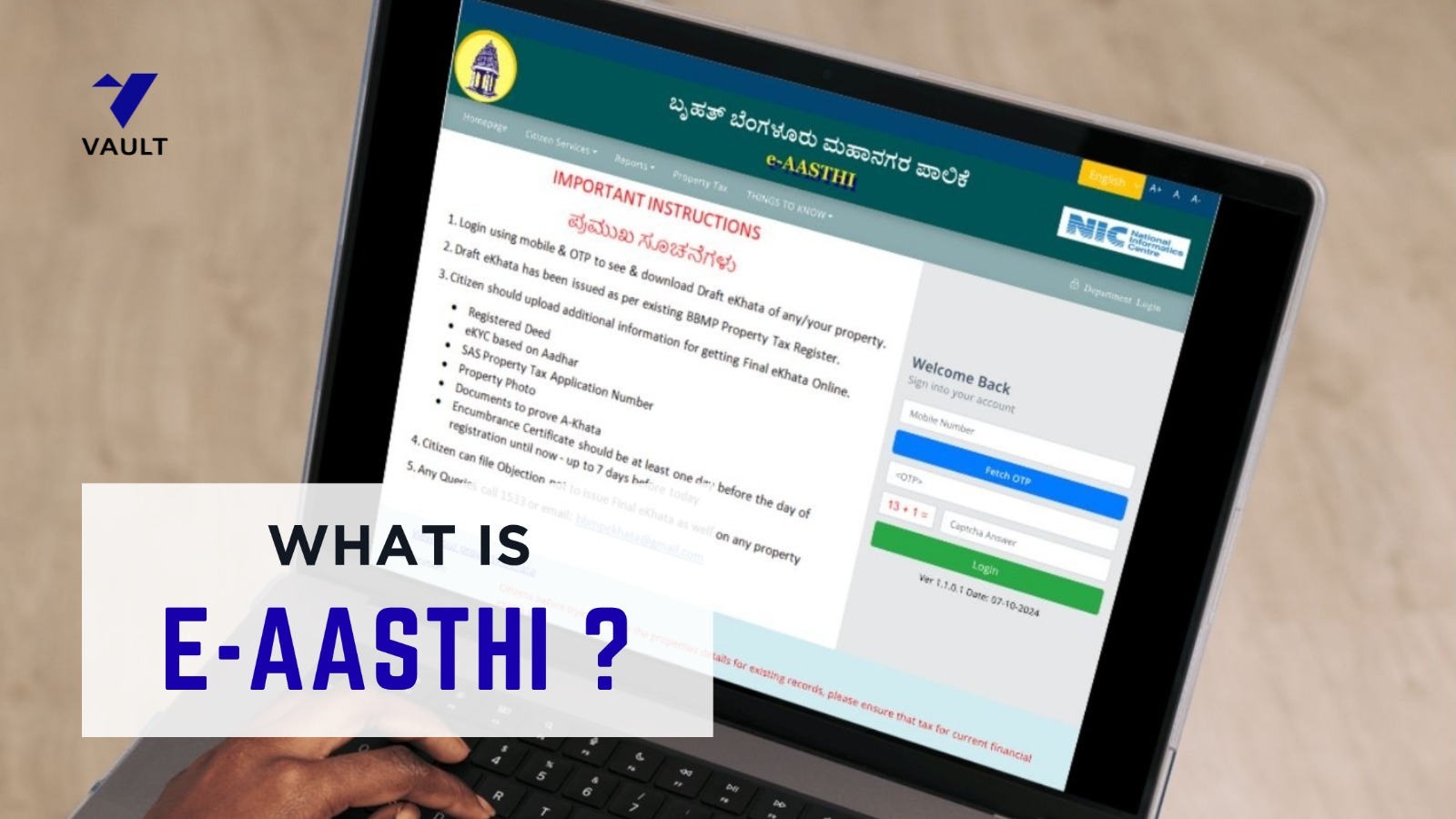
Learn everything about E-Aasthi in Karnataka and its purpose, working, verification process, ePID, Form 3, MRC, and how it differs from E-Khata and E-Swathu. Ensure smooth property transactions with BBMP digital records.
Quick Summary (TL; DR)
E-Aasthi is Karnataka’s digital property record system used by BBMP to identify and verify urban properties. It assigns a unique ePID, links ownership and assessment details, and supports verification, Form 3, and MRC access. E-Aasthi improves record accuracy, reduces disputes, and is widely checked during property sales, loans, and legal due diligence.
What Is E-Aasthi?
E-Aasthi is an online property record system introduced by the Government of Karnataka.It digitally stores property ownership, assessment, and identification details under BBMP and other local bodies.
In short:
- “Aasthi” means property
- “E” means electronic
So, E-Aasthi = Electronic/Digital Property Records. It helps authorities and citizens maintain accurate, tamper-free property data.
What is E-Aasthi Full Form and Purpose?
- Full form: Electronic Aasthi
-
Purpose:
- Create a single digital record for properties
- Link property details with BBMP ePID
- Reduce manual errors and duplicate records
E-Aasthi is mainly used for property identification and verification, while Khata is used for taxation.
When Was E-Aasthi Introduced?
E-Aasthi was rolled out as part of Karnataka’s efforts to modernise urban governance and property administration.
It was introduced after the limitations of manual Khata and physical records became evident, especially in fast-growing cities like Bengaluru.
The goal was to:
- Improve accuracy of property records
- Reduce duplication and mismatches
- Enable easier verification for citizens and authorities
Over time, E-Aasthi has been integrated with BBMP systems for better property tracking.
How E-Aasthi Works for BBMP Properties?
For BBMP properties, E-Aasthi works as a property identification and verification layer.
Each property is:
- Digitally mapped
- Assigned a unique property identity (ePID)
- Linked to ownership and assessment details
This makes it easier for BBMP to:
- Track properties
- Validate records
- Cross-check data during transactions
What is E-Aasthi Portal and Official Website
Citizens can access E-Aasthi records through the official Karnataka portal:
E-Aasthi portal: eaasthi.karnataka.gov.in
What are the services available through the E-Aasthi System?
1. Property Identification
- Assigns a unique identity to each property
- Links property to ward, zone, and locality
2. Property Search
- Search by owner name
- Search using ePID
- Location-based search
3. Property Record Verification
- Confirms whether a property exists in BBMP records
- Helps identify mismatches or missing entries
4. Access to Property Details
- Basic ownership information
- Assessment-related data
- Linked municipal records
5. Download of Property Records
- E-Aasthi extracts or PDFs (where available)
- Municipal Record Copies (MRC)
6. Support for Due Diligence
- Used during property sale, purchase, or loan processing
- Helps professionals validate property history
How to Verify Property Details Using E-Aasthi?
Property verification is commonly done during transactions or legal checks.
Verification Process
- Access the E-Aasthi portal
- Enter ePID or owner details
- Review property information shown
- Match details with physical documents
Why Is E-Aasthi Verification Important?
E-Aasthi verification helps:
- Reduce ownership disputes
- Avoid documentation mismatches
- Improve confidence during property transactions
It is especially useful for:
- Buyers
- Sellers
- Legal professionals
- Financial institutions
What Is E-Aasthi Form 3 and MRC?
Form 3: Property assessment details
MRC (Municipal Record Copy): Official extract of property data
These documents help in:
- Property verification
- Legal review
- Loan and due diligence checks
What is the difference Between E-Aasthi and E-Swathu?
E-Aasthi: Urban properties (BBMP)
E-Swathu: Panchayat / rural properties
They are separate systems used by different authorities.
Why E-Aasthi Is Important for Property Owners?
E-Aasthi helps in:
- Clear ownership verification
- Reducing future disputes
- Smoother Khata, tax, and registration processes
- Better property transparency in Bengaluru
It is increasingly checked during:
- Property sale
- Bank loans
- Legal due diligence
What are the Common Issues Faced by Property Owners
- Property not showing online
- Name mismatch
- Old records not digitised
- ePID linking issues
Such cases usually need professional follow-up with BBMP.
How Vault Proptech Simplifies E-Aasthi-Related Work
Understanding and managing E-Aasthi records can be confusing, especially for older properties.
Vault Proptech helps property owners by:
- Reviewing existing property records
- Guiding on missing or incorrect E-Aasthi entries
- Coordinating with concerned departments
- Supporting documentation clarity
For complex cases, it is always advisable to check with the concerned team for proper guidance.
Get your property documents today with vault