10 Property Documents You Must Verify Before Buying a Home
Aditya KamathUpdated on: August 1, 2025
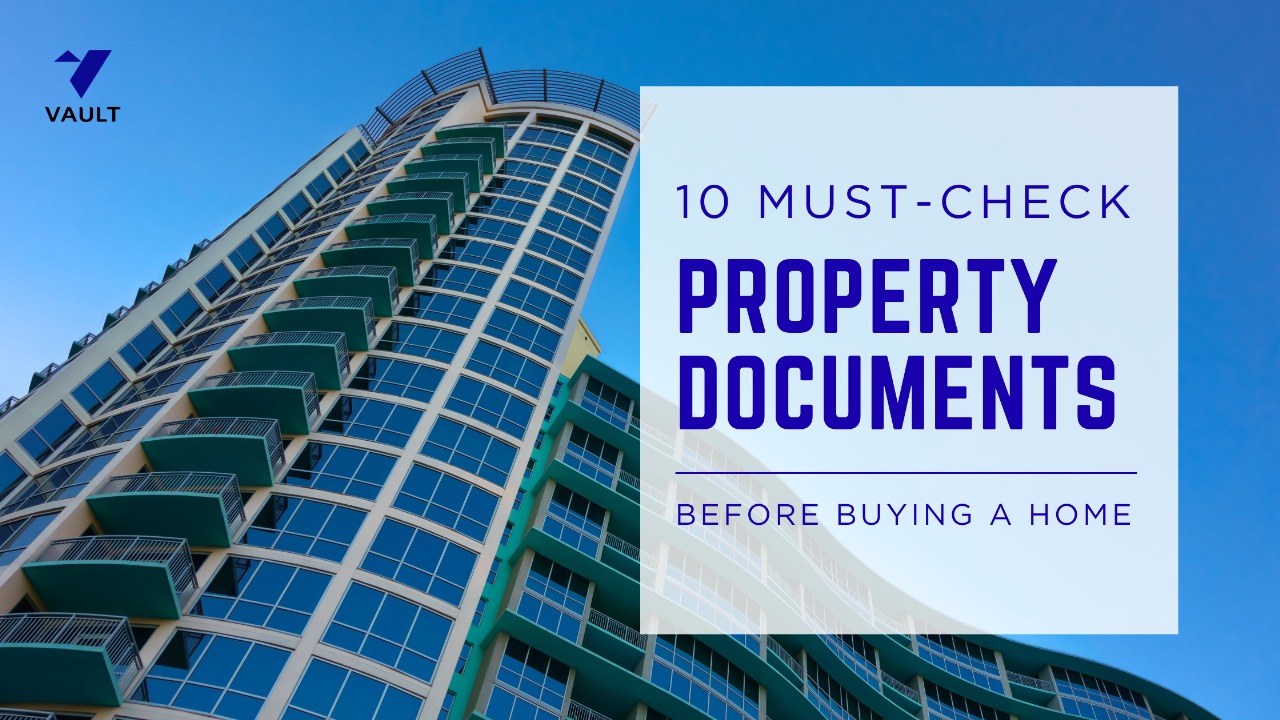
Buying a home is a dream for many — but that dream can quickly turn into a legal or financial nightmare if the right documents aren’t checked. In India, property ownership is tied to a set of mandatory approvals and records. Skipping even one could lead to disputes, penalties, or denial of utilities and loans.
At Vault, we make sure buyers walk into their homes with complete confidence. Here are the ten essential documents every homebuyer should verify:
- Title Deed — The title deed establishes legal ownership of the property. It must be clear of disputes, loans, or encumbrances. For resale homes, the mother deed (chain of ownership) is equally important to ensure the property has a clean history.
- Registered Sale Deed — This is the final proof of property transfer between buyer and seller. Without registration at the sub-registrar’s office within four months of signing, the sale is not legally valid.
- RERA Registration Certificate — Every project above 500 sq. m. of land or 8 units must be registered under RERA. This certificate lets you verify the project on the RERA portal, ensuring accountability from the builder and protection for the buyer.
- Approved Building Plan — Issued by the local municipal authority, this confirms that the construction follows sanctioned layouts and zoning laws. Any deviation can make the structure illegal.
- Khata Certificate / Extract — In Karnataka and certain states, this document records the property details in the municipal registry. It is needed for tax assessment and utility connections like water and electricity.
- Completion Certificate (CC) — After construction, local authorities issue a CC if the building complies with approved plans, building codes, and safety norms. Without it, an occupancy certificate cannot be granted.
- Occupancy Certificate (OC) — The OC is proof that the building is ready for occupation. Banks require it for home loans, and buyers need it to move in legally. Absence of an OC could even make the property unsafe or non-compliant.
- No Objection Certificates (NOCs) — Builders must obtain NOCs from several departments including fire safety, pollution control, water, electricity, and more. The exact list depends on state laws, but without these, the project may not be legally complete.
- Allotment Letter — For under-construction projects, this document confirms allocation of the property and outlines payment schedules, charges, and unit details. It is essential for securing home loans during construction.
- Possession Letter — Issued by the builder, this specifies the handover date. It is necessary for taking possession but does not replace the sale deed as proof of ownership.
Why This Checklist Matters
Every one of these documents plays a role in protecting your investment. Missing paperwork can result in:
- Loan rejections
- Penalties from municipal bodies
- Ownership disputes in the future
At Vault, our legal experts verify every document, handle compliance, and give you 100% clarity before you buy. That way, you don’t just own a home — you own peace of mind.